Share this:


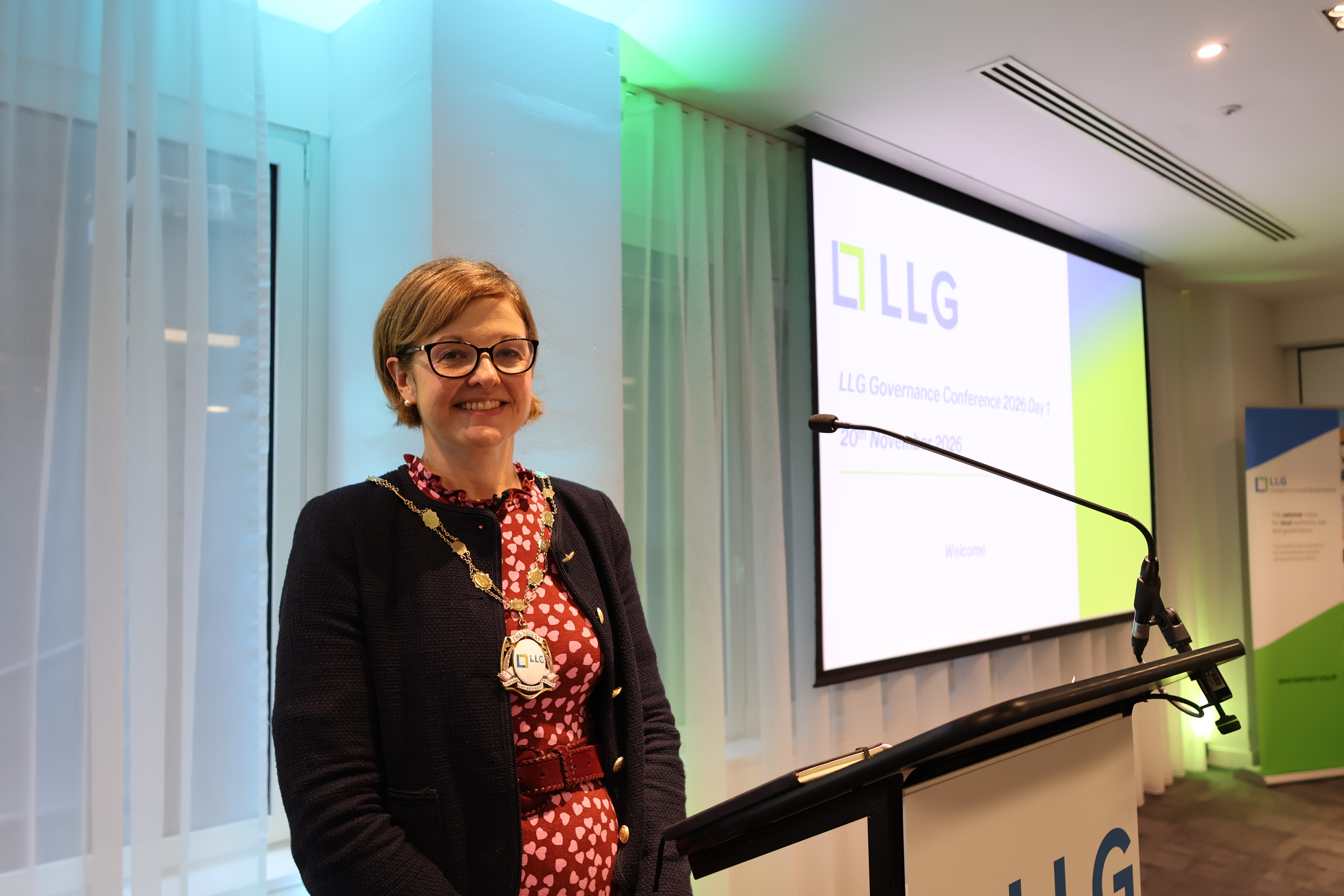

Helen Bradley, LLG President
The Lawyers in Local Government (LLG) Governance Conference 2026 opened today with a compelling presidential address from LLG President Helen Bradley, who challenged delegates to place culture, leadership and trust at the heart of governance as local government faces a period of unprecedented change.
Welcoming a packed audience of monitoring officers, governance professionals, lawyers, partners and sector leaders, Helen described the conference as taking place at a pivotal moment for local government. With councils continuing to contend with financial pressures, rising service demand, increased expectations of transparency and accountability, and the far-reaching implications of devolution, reorganisation and technological change, she emphasised that strong governance has never been more important.
A central theme of Helen's presidential year has been the belief that "governance is everyone's business". She stressed that governance can no longer be viewed solely as the domain of specialists. Instead, it influences every decision councils make, every partnership they enter into and every service they deliver, underpinning public confidence, organisational resilience and democratic accountability.
However, Helen was clear that effective governance extends beyond constitutions, schemes of delegation and legal frameworks. The most successful organisations, she argued, are those that foster healthy cultures, ethical leadership and an openness to constructive challenge. "Good governance is not simply about process. It is ultimately about people, culture and leadership," she told delegates.
These themes will run throughout the conference programme, with sessions exploring ethical governance, standards, leadership, public accountability and organisational culture. Bradley highlighted the ongoing national debate around the future standards framework and the role that both LLG and the Association of Monitoring Officers (AMO) have played in contributing to those discussions. While legislative reform may still be some way off, she noted that councils can take practical steps now to promote ethical behaviour and strengthen public trust.
Trust, she suggested, remains the foundation on which effective governance is built.
The President also reflected on the significant challenges posed by local government reorganisation and devolution. Governance professionals, she said, are increasingly being called upon to support large-scale structural change while safeguarding democratic accountability, transparency and legal compliance. The challenge is not simply designing future structures but ensuring that the values underpinning good local government continue to thrive within them.
Emerging technologies also featured prominently in the address. Helen acknowledged the growing role of artificial intelligence across local government, highlighting both its potential benefits and the need for careful consideration of ethics, accountability, information governance and public confidence. She urged governance professionals to ensure innovation is embraced responsibly, balancing efficiency and opportunity with transparency and public trust.
Alongside the conference's governance agenda, Helen reflected on the progress made by AMO during the past year. She highlighted the development of specialist networking groups, stronger engagement with government and sector stakeholders, and announced plans for a new programme of bespoke guidance and practice notes for monitoring officers. Recognising the unique pressures facing the profession, she reiterated the importance of providing practical support, trusted advice and opportunities for peer-to-peer learning.
Looking to the future, Helen also announced the development of the new LLG Foundation programme for junior lawyers and those entering local government practice. Combined with initiatives such as Inspire and wider work experience programmes, it represents a significant investment in the sector's next generation of leaders. She emphasised that attracting, retaining and developing talent is essential to the long-term resilience of local government and the legal profession that supports it.
Closing her address, Helen paid tribute to the volunteers, regional networks, speakers, mentors and practitioners who make LLG and AMO truly practitioner-led organisations. Encouraging delegates to make the most of the day, she urged attendees to share ideas, build relationships and embrace the opportunities for learning that exist both inside and outside the conference sessions.
With governance, leadership, professional development and public trust firmly on the agenda, the conference promises a day of thoughtful debate, practical insight and valuable networking for a sector navigating profound and continuing change. As delegates disperse into the first sessions of the day, Helen’s message remains clear: while structures, legislation and technology may evolve, the foundations of effective local government will always rest on ethical leadership, strong professional relationships and a shared commitment to serving communities well.
Share this:



 Latest News