Share this:



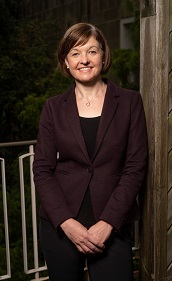
I am both delighted and deeply honoured to be appointed President of LLG. To be entrusted with this role by peers whose professionalism and judgement I respect so highly is something I do not take lightly.
At the outset, I want to pay tribute to Paul Turner, our outgoing President, and to thank him sincerely for his leadership, commitment and calm authority during his term of office. Paul has stewarded both LLG and, latterly, AMO with great care. The strength and credibility of LLG today owe much to his work. I also want to acknowledge the contribution of Presidents who have gone before him. Each has shaped LLG in different ways, responding to the challenges of their time while preserving the values that define us: professional integrity, thoughtful independence and public service. I am very conscious that I inherit not just a role, but a strong and well‑earned legacy.
I take on the Presidency at a time of significant flux for our sector. We are experiencing structural, institutional and constitutional change; much of it externally driven, much of it complex, and all of it requiring calm, principled and professionally assured leadership. Against that backdrop, my priorities for the coming year sit under three broad and connected themes.
The first of these is consolidating AMO. AMO has launched successfully and now stands as a credible and respected voice for Monitoring Officers and those exercising statutory governance roles. My focus is not on expansion for its own sake, but on ensuring clarity of purpose, confidence in its offer, and strong connections across the profession. That means supporting consistent professional standards, effective peer networks and safe spaces for reflection and judgement. In an increasingly complex environment, assurance does not come from rigid rules alone; it comes from shared understanding, professional confidence and the ability to test thinking constructively with peers. The revised standards framework is an important milestone in this regard. It represents a collective articulation of what good looks like in modern local governance and should be used as a steady, proportionate and enabling reference point.
My second priority is supporting Monitoring Officers and Deputy Monitoring Officers through periods of political change, local government reorganisation and wider governance reform. Across England and Wales, colleagues are working in environments shaped by elections, leadership transitions, combined authority arrangements and structural change. These moments test systems not because people are failing, but because expectations, roles and relationships are shifting rapidly. As the landscape evolves, our role as governance professionals is to ensure that scrutiny, standards, decision‑making and legal accountability remain clear and workable in practice. For MOs and DMOs in particular, this brings additional pressure. Our response must therefore be practical and empathetic, recognising heightened scrutiny, acknowledging the strain of ambiguity and reinforcing the professional judgement required at the intersection of law, governance and democracy.
My third priority is about the strength and sustainability of our profession. I want to build on our excellent National Lead model and I thank all those who contribute voluntarily to LLG’s work. Our Regions remain the main conduit between members and the centre, and I want to continue strengthening that connection. Crucially, this is also about the future. We must actively encourage and develop the Monitoring Officers and Deputy Monitoring Officers of tomorrow, recognising that all local government lawyers contribute to governance every day, and that breadth strengthens the profession and widens the pipeline of future governance leaders.
I look forward to working with you all to ensure that LLG continues to be a trusted and steady presence in times of change.
Thank you.
Helen Bradley
LLG President
Share this:




 Latest News